



Pentelic Marble – Dionysus Marble
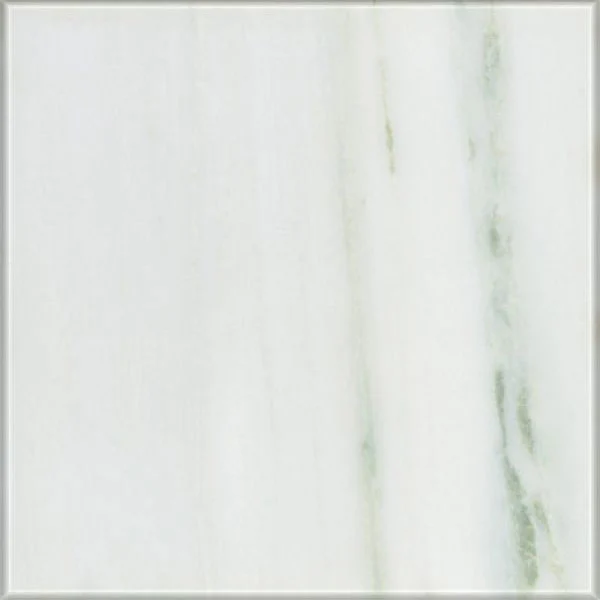
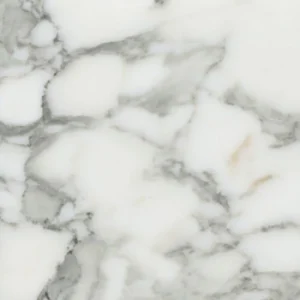
The Pentelic Marble, known today also as Dionysus Marble, has a white base with light gray or green veins. It is a calcareous marble with a calcium content of over 97%. From Penteli came the material of the Parthenon and the Erechtheion, and the present one is quarried in the same area, in the first underground quarry of Greece.
- Color
- Semi-white, White
- Origin
- Penteli
- Material
- Marble
What is Pentelic Marble
Pentelic Marble, known today also as Dionysus Marble, is the material from which the Parthenon, the Erechtheion, the Propylaea, the Theseion, and the Temple of Olympian Zeus were built. It is a calcareous marble with a calcium carbonate content of over 97%, with a white base and light gray or green veins. It is extracted in the same area of Penteli as the ancient quarries, at an altitude of about 700 meters, in the first underground quarry that operated in Greece.
Features
- Geological type: calcareous marble
- Origin: Penteli, Attica
- Composition: calcium carbonate over 97%, dolomite about 2%
- Color: mainly white, with locally off-white spots
- Veins: light gray or green
- Extraction: underground quarry at an altitude of about 700 meters
Technical details
- Apparent specific gravity: 2.720 kg/m³
- Open porosity: 0.3%
- Water absorption coefficient: 0.1%
- Capillary water absorption: 0.173 g/(m²·sec^0.5)
- Flexural strength: 18.9 MPa
- Abrasion resistance: 21.370 mm³ volume loss
- Slip resistance, unpolished: 72 SRV on dry and 69 SRV on wet surface
- Frost resistance: flexural strength 16.1 MPa after 48 cycles
The last two measurements are rarely published and address two practical questions: how slippery the unpolished material is when wet, and what remains of its strength after repeated freezing and thawing.
Where it is used
It is used in flooring for indoor and outdoor spaces, in stairs, in wall and facade cladding, as well as in sculpture, where its historical weight is part of the choice. The measurements of slip resistance and frost make it a candidate for outdoor applications with the appropriate finish, with suitability always depending on the thickness and surface treatment.
What affects the price
Underground extraction has a different cost from surface extraction, and this is reflected in the price of the material. Next is the intensity of the veins, which determines the sorting, and then the thickness, special cuts, and finishing. For large public works, documentation with an environmental declaration may be part of the overall bid assessment.
Maintenance
In outdoor spaces, the main wear does not come from use but from pollution and rain, which over time darken the surface. Periodic waterproofing is more important here than in indoor flooring. Indoors, the same applies as for any calcareous material, namely avoiding acidic products and gentle cleaning.
Features



Frequently Asked Questions
It comes from the same area and the same deposit, but the image of today's material is not identical. Sources indicate that the marble being extracted today has more gray tones than the pure white of antiquity.
Yes. For the slabs Dionyssos White there is a registered Environmental Product Declaration, valid until May 2029. It is a requirement for public works and studies with environmental criteria.
The Green Dream is the same material in slabs where the green veins are more intense. The green shades are recorded as a characteristic of Pentelic marble and in some pieces they dominate. # Level A Texts — batch 2 Half-white Naxos, Gray Naxos, Kavala, Sinai Pearl, Nero Marquina, Crema Marfil. Note: in the last four **there is no section «Technical specifications»**, because no published measurements were found. It is added as soon as the client or the quarry provides them.
Information about Pentelic Marble – Dionysus Marble
Contact us for availability, finishes, applications, and technical information.