







White Marble of Naxos
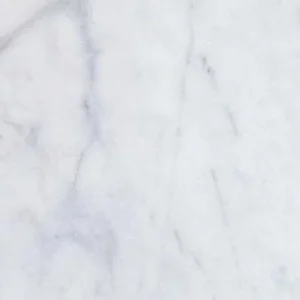
The white Marble of Naxos, known in the market as Crystalline Naxos, has a bright white base and a characteristic crystalline structure. It is a calcareous marble from Naxos, with natural variations in the shade and intensity of the crystallinity between the slabs. In the whitest selections, the pure base predominates, while the crystalline texture becomes more perceptible in the light.
- Color
- White
- Origin
- Naxos
- Material
- Marble
What is the White Marble of Naxos
The white Marble of Naxos is available on the market as Crystalline Naxos and is a calcareous marble with a strong crystalline structure. Naxos has a history in marble since antiquity, with the most famous example being the unfinished Colossus of Apollo, standing 10.5 meters tall and weighing approximately 50 tons, which remains in the ancient quarry. The material currently extracted comes from fronts in the center of the island and is available in three selections, white, off-white, and gray.
Features
- Geological type: calcareous marble
- Origin: Naxos
- Commercial name: Crystalline Naxos
- Color: white with a neutral base
- Texture: strongly crystalline, with visible crystals in the light
- Selections: white, off-white, gray
- Uniformity: the shade and intensity of the crystallinity vary between the slabs
Technical details
- Apparent specific gravity: 2.710 kg/m³
- Water absorption coefficient: 0.09 %wt
- Compressive strength: 89 MPa
- Flexural strength: 13 MPa
- Wear after abrasion: 8.56 mm
The water absorption at 0.09% is lower than the published values for the white Thassos, which range from 0.2 to 0.23%. Lower absorption means less tendency for stains from liquids.
Where it is used
It is used in floors, wall cladding, bathrooms, and stairs, in residential and commercial spaces. Its bright and neutral base makes it compatible with both modern and classical architectures, and in large surfaces, it works best when the slabs are selected before cutting, to check the color continuity.
What affects the price
The three selections of the deposit, white, off-white, and gray, do not have the same price, and the white is the most sought after. After that, the cost varies depending on the thickness required by the application and how many special cuts the project has. In large surfaces, the cost of selecting slabs from a common batch is also added, to check the color continuity.
Maintenance
Calcareous marble reacts with acids: a drop of lemon or vinegar leaves a dull mark that does not come off with cleaning. On the white base, the problem is not so much the stain as the matte imprint on the polished finish. Use a neutral cleaner, avoid general-purpose products with lemon, and renew the waterproofing every few years in kitchens and bathrooms.
Features
| Color | White |
|---|---|
| Origin | Naxos |
| Material | Marble |



Frequently Asked Questions
No. The ancient quarries, from where the Colossus of Apollo originated, are no longer being mined. The material of today's market comes from other fronts in the center of the island and is marketed as Crystalline.
In geology and behavior. The Naxos is calcareous, the Thasos is dolomitic. Practically, the dolomitic withstands acids better, while the Naxos has lower water absorption in the published measurements.
Because the crystalline structure is not distributed uniformly within the deposit. From slab to slab, the intensity of the crystals, the natural shading, and the heat of the hue change. On large surfaces, this is addressed by selecting slabs before cutting.
Information about White Marble of Naxos
Contact us for availability, finishes, applications, and technical information.